

Gifting campaigns
A hundred recipients should still feel like a hundred people.
Plan the audience, catalogue, messages and delivery route together, then review every exception before a larger send is confirmed.
01
Define the objective and audience
Start with why the campaign exists and who it is appropriate for. Review the supplied list, intended purpose and any uncertain or ineligible recipients before choosing gifts.

02
Agree the catalogue and budget
Choose one gift or a controlled selection with clear value bands. Confirm availability, customisation, destination and costs before presenting the final campaign for approval.

03
Approve messages and delivery
Use a reviewed message pattern with room for personal context. Choose direct delivery, recipient choice or private address collection according to the relationship and available information.

04
Run, monitor and resolve exceptions
Keep recipient rows independent, track delivery and claims, and resolve substitutions, missing addresses or failures without exposing one recipient’s private information to another.
Today larger campaigns are scoped and operated with you. Automated campaign orchestration and in-product attribution remain planned capabilities.
Scale the operation, not the assumptions.
Every campaign keeps recipient-level eligibility, approval, status and exceptions visible. Larger sends remain reviewed rather than autonomous.
Can this work for more than one recipient?
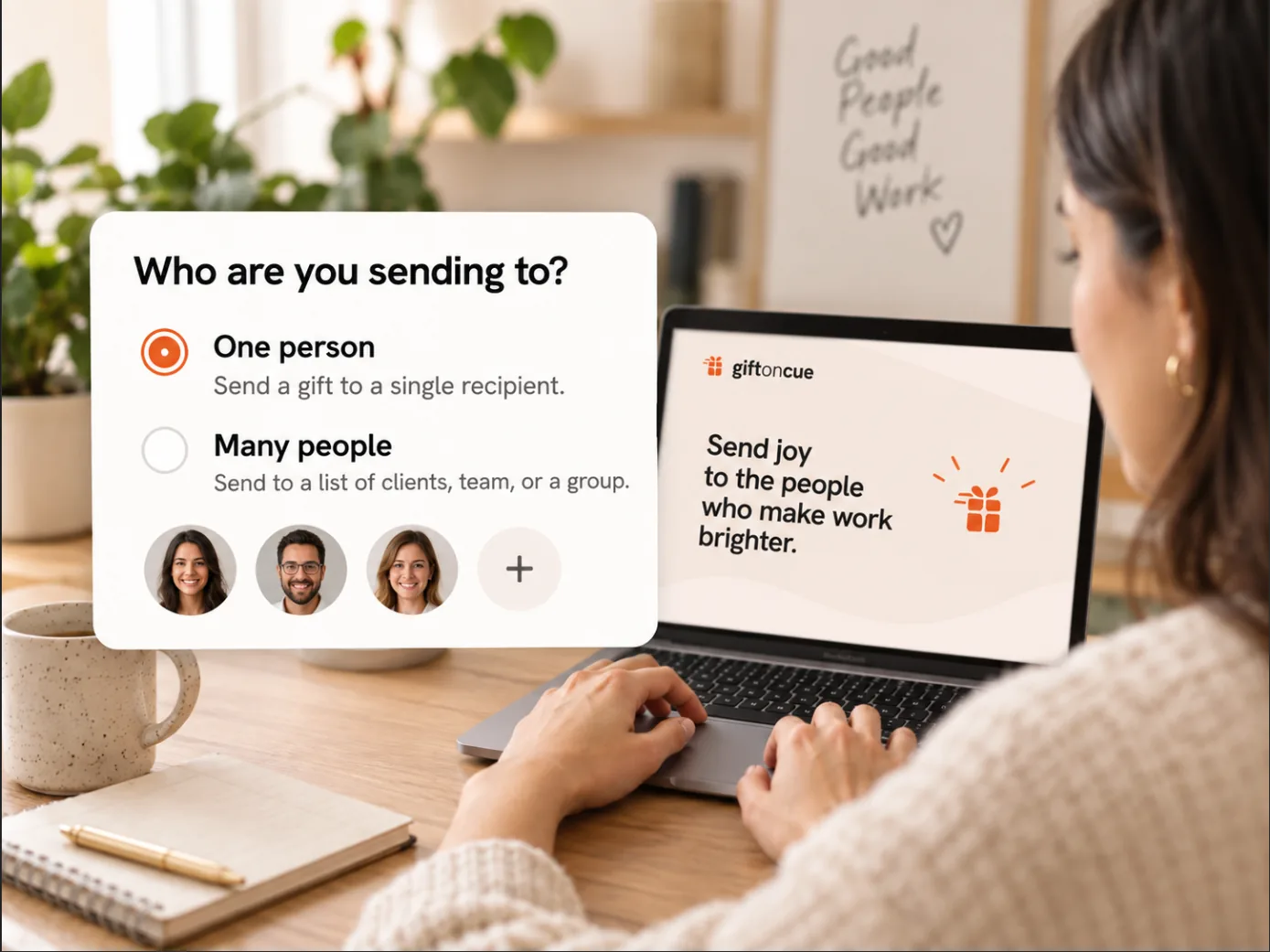
Yes. The current self-service flow supports up to 20 recipients in one send. We review larger lists and more complex campaigns with you before anything is confirmed.
Can gifts be sent internationally?
We confirm product availability, delivery route, lead time and possible customs implications for each destination before a campaign is approved.
Does this connect to our CRM or HR platform?
Not today. CRM, marketing and HR-trigger integrations are planned capabilities. Current programmes are agreed and operated with you rather than presented as automated.
What can we measure responsibly?
Track recipient-level delivery, claim, decline, expiry and exceptions. Commercial outcomes should be reported separately; receiving a gift does not prove that the gift caused an opportunity or sale.